chinabuy Trail Shoe Review for Rough Paths
chinabuy Trail Shoe Review for Rough Paths
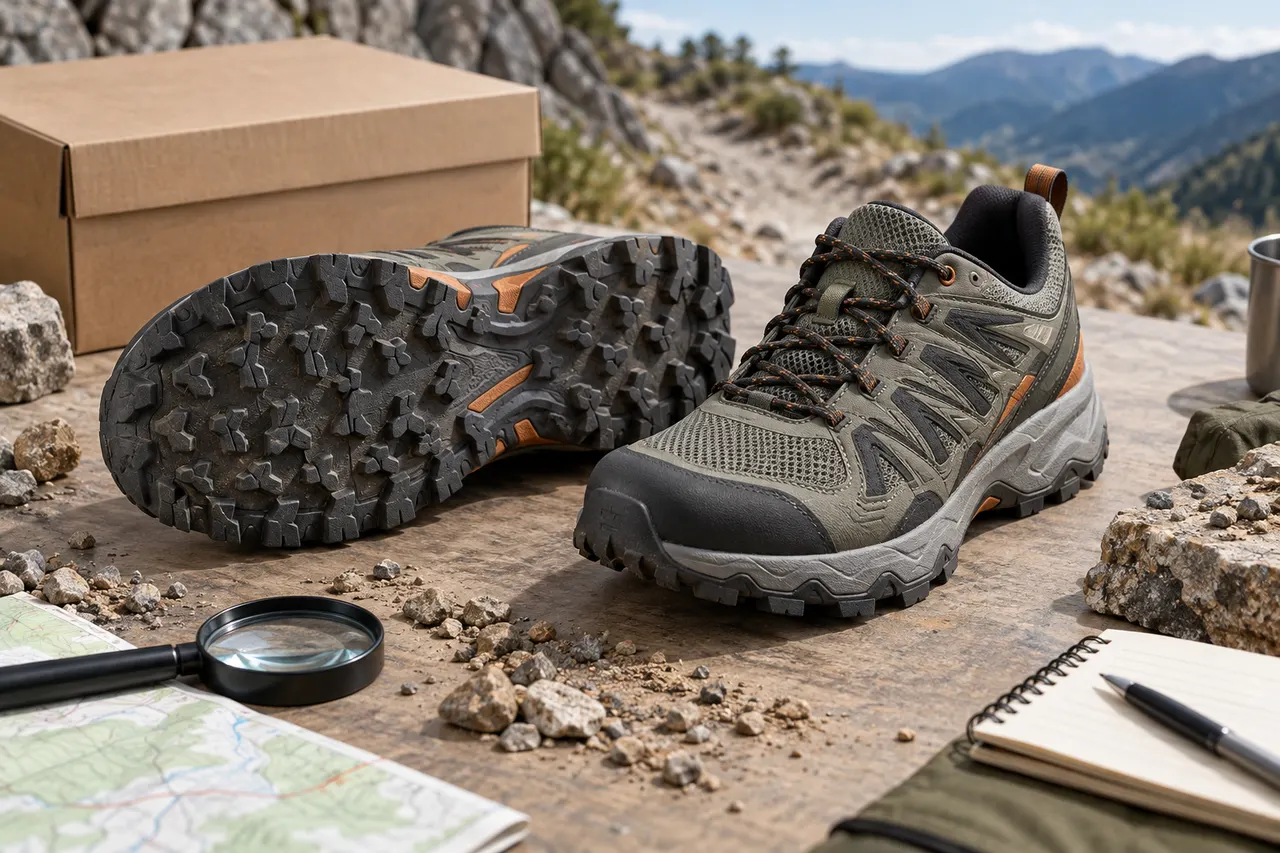
Caption: Before ordering trail running shoes, you should evaluate the outsole, upper protection, collar structure, and QC photos together as one set of evidence.
Review Subject, Applicable Terrain, and Evidence Boundaries
This article does not review a specific pair of shoes that has already been worn. Instead, it provides a set of evidence-based evaluation methods for users preparing to purchase trail running shoes through china-buy.org. The applicable task is clear: when a product page only offers images, sizes, basic specifications, and seller descriptions, how can a buyer determine whether the shoe is suitable for mountain trails, gravel paths, wet dirt roads, or everyday light hiking?
Verification date: 2026-09-09. This article does not claim to have purchased, received, worn, or field-tested any specific shoe model, nor does it determine brand authenticity. Outsole rubber compound, actual grip, durability, waterproofing, weight, and sizing deviations are all highly variable facts and must be based on the product page, seller responses, warehouse QC photos, and actual measurements upon receipt.
During the purchase process on china-buy.org, users typically go through product selection, submitting product links, warehouse inspection, confirming QC, consolidating packages for shipping, tracking logistics, and after-sales communication. The key risks of trail running shoes are concentrated before warehouse inspection and during the QC confirmation stage: if you only look at colors, brand names, or model photos, it's easy to overlook factors that truly affect performance, such as outsole tread patterns, toe protection, collar sand ingress, and inconsistencies between left and right shoe shapes.
This article is suitable for these users:
Those who want to buy running shoes for country trails, gravel paths, park dirt roads, or light hiking.
When product pages have many images but lack complete professional reviews.
When unsure whether the outsole tread is suitable for wet or loose surfaces.
Those who want to know which details to focus on during the warehouse QC stage on china-buy.org.
This article is not suitable for these situations:
Those needing professional trail racing shoes, snow and ice shoes, hiking boots, or non-slip work shoes.
Those needing medical arch correction or shoe recommendations after serious knee or ankle injuries.
Those who only want to confirm whether a brand is authentic. This article will not speculate on authenticity from images.
First Define the Requirements for Mountain Trails, Gravel Paths, and Wet Surfaces
When asking if a trail running shoe is suitable, you can't just ask "Is it non-slip?" Different surfaces require different structures. Mountain trails typically require stable forefoot flex, toe protection, and adequate outsole edge bite; gravel paths place more emphasis on outsole coverage, upper wrapping, and midsole stability; wet surfaces rely more on rubber contact area, tread mud shedding ability, and foot placement control.
If your main routes are park plastic tracks with a bit of dirt, a thick, deep-lug outsole may actually be tiring. If you often walk on dirt uphills, loose gravel, or wet forest paths, shoes with shallow tread and a lot of exposed foam should be approached with caution. 🙂
A practical evaluation order is: first confirm the surface, then look at the outsole, then the upper, and only then consider color and price. Trail running shoes are not necessarily better with more thickness or deeper lugs. What you need is a match between the outsole, upper, and usage environment.
Terrain | More important structure | Signals to be cautious about |
|---|---|---|
Dry dirt roads, light mountain trails | Medium-depth tread, forefoot flex, toe protection | Outsole covers only partial areas, toe fabric exposed |
Loose gravel paths | Full or large-area rubber, lateral support, upper wrapping | Midsole too high but sidewall support weak |
Muddy roads after rain | Larger-spaced outsole lugs, mud shedding space, collar fit | Fine, shallow tread that gets clogged with mud and doesn't shed |
Urban commuting plus occasional trails | Comfort cushioning, not overly protruding lugs | Deep-lug hard soles, increased noise and wear on flat roads |
Judging Outsole Coverage and Tread Direction from Product Images and Specs
When looking at the outsole, don't just look at promotional angles. You need at least one clear photo of the sole's bottom, one side view, and one clear image of the transition area between forefoot and heel. If the product page lacks sole photos, it's advisable to ask the seller before ordering, or note in your china-buy.org order to remind the warehouse QC to photograph the outsole details.
The first thing to check on the outsole is coverage area. Shoes suitable for gravel and mountain trails should usually have relatively complete rubber coverage, especially on the outer forefoot, outer heel, and under the toe area. If the midsole foam is exposed in large areas, the shoe's wear resistance on sharp rocks, gravel, and rough surfaces will be higher risk. Exposed foam isn't necessarily a dealbreaker, but it's more suitable for light terrain or everyday wear.
The second thing to check is tread direction. If the forefoot has lugs arranged backward or in multiple directions, that's typically better for uphill push-off; if the heel has reverse or transverse tread, that's better for downhill braking. Side lugs relate to grip stability during turns and traversing slopes. This can only be a structural risk assessment, not a direct equivalent to actual non-slip performance, because rubber hardness and ground conditions also affect results.
The third thing to check is lug spacing. Dense shallow tread is good for hard surfaces, mixed sand and gravel, and urban roads, and may feel smoother; wider-spaced lugs are better for mud shedding, but on concrete or indoor floors they may be harder, noisier, and wear faster. ⛰️
Before ordering, you can examine the images in this order:
Is there a complete, clear, unobstructed image of the sole tread?
Are the forefoot and heel tread directions different, and do they support uphill and downhill?
Do the lugs extend to the edges of the sole, rather than being concentrated in the middle?
Is the midsole foam exposed in large areas?
Are the left and right sole treads consistent in the QC photos?
Checking Upper Wrapping, Toe Protection, and Collar Sand Ingress Risk
The parts of a shoe that get damaged on trail terrain are often not the sole, but the toe, the sides of the upper, and the collar. If the product images only show the overall colorway, the buyer needs to actively seek out close-up photos of the toe and the upper material.
Toe protection can be judged from two points: first, whether there is rubber or TPU wrapping at the front; second, whether the wrap extends over the front of the big toe and little toe. On mountain trails and gravel paths, the toe often hits rocks, roots, and step edges. Shoes with only soft fabric toes are lighter, but have higher risk of damage from kicking rocks and toe impact.
Upper wrapping should be judged by lateral support, not just mesh breathability. Large areas of thin mesh are suitable for summer and low-intensity terrain, but if the shoe lacks patches, straps, or structural lines on the sides, the foot may slide inside during lateral movements. Trail running shoes endure more lateral forces on downhills and slopes, so a very soft upper will compromise stability.
Collar sand ingress risk cannot be ignored. Low-cut running shoes cannot completely prevent sand, but the fit of the tongue, collar, and heel counter affects the probability of small stones entering. If the product images show a very thin tongue, a large collar opening, and a soft heel counter, expect to stop more frequently to clear debris from inside the shoe when on gravel paths.
If you plan to walk on dusty trails, focus on these during the QC stage:
Is the tongue crooked or too short?
Is the heel counter visibly collapsed?
Are the left and right collar heights consistent?
Is the toe wrap fitting properly, with no lifting edges?
Are there any holes, runs, or glue stains on the upper mesh?
Analyzing What Can Be Confirmed About Cushioning, Stability, and Weight Information
Cushioning cannot be judged by midsole thickness alone. A thick midsole may be comfortable, but can also cause a high center of gravity and unsteady landings. Trail surfaces are not like flat roads; the foot frequently lands on slopes, rocks, and potholes. If the sole is very thick, but sidewall support and heel stability structures are not evident, be more cautious on gravel downhills.
If the product page lists weight, confirm the unit, size, and whether it is the weight of a single shoe. Many shoes' weights vary with size, so you cannot apply the weight of one size to all sizes. If there is no weight information, you can roughly estimate from sole thickness, outsole coverage, and the number of upper overlays, but this is only an inference and should not be written as a definite fact.
Stability can be observed from three places: whether the heel has a relatively firm support structure, whether the sole is significantly wider than the upper, and whether the midsole sidewalls wrap up around the foot. For trail beginners, stability is usually more important than extreme lightness. 🏃
It should be noted that cushioning material names, rebound descriptions, and seller copy like "professional trail" cannot serve as the sole basis for purchase. A safer approach is to treat them as clues to be verified, then use product images and QC photos to confirm whether the structure supports these descriptions.
Using QC Photos to Check Left/Right Shoe Shape, Glue, and Outsole Adhesion
After ordering through china-buy.org, warehouse QC photos are crucial evidence for deciding whether to proceed with shipping. QC for trail running shoes should not just look at the shoe box, tags, and overall appearance. What really affects the risk of use is whether the left and right shoes are symmetrical, whether the outsole is properly attached, and whether the upper has obvious defects.
It is recommended to request these angles as much as possible in order notes or after-sales communication: full front view, full side view, heel alignment, sole bottom, toe close-up, collar top view, size tag, and close-ups of any flaws. If the photos are blurry or lack sole images, do not rush to confirm shipping; request additional photos first.
During the QC stage, focus on these types of problems:
Whether the left and right toe heights are significantly different.
Whether the outsole edges have unglued areas, lifting, or irregular glue overflow.
Whether the sole lugs are missing, deformed, or inconsistent between left and right.
Whether the upper has holes, severe runs, hard creases, or stains.
Whether the heel is crooked, and when placed flat, whether one shoe visibly pronates more.
Whether the size tag matches the ordered size.
Glue marks need to be graded. Minor glue overflow is not uncommon in some footwear products, but if overflow is accompanied by outsole lifting, upper delamination, or toe wrap not adhering, it's not merely a cosmetic issue. For trail use, outsole adhesion is more important than a complete shoe box.
Who Should Buy and Which Scenarios Require Caution
People who should buy are those who can accept the uncertainty of cross-border purchases, are willing to review QC photos, and have clear usage scenarios. If you only occasionally walk on park dirt roads, you can prioritize medium-tread, breathable uppers, and moderate weight. If you plan to walk on gravel, forest paths, and slopes, prioritize outsole coverage, toe protection, and heel stability rather than just low price.
The following situations warrant caution:
Target routes often have wet rocks, ice, snow, or steep downhills.
Product page lacks sole photos and cannot supplement with QC sole photos.
Seller descriptions use a lot of exaggerated language but lack clear specs and real photos.
You have low tolerance for sizing errors and cannot accept return/exchange costs.
You need competition-level performance or medical corrective support.
From a cost perspective, the right trail running shoes can reduce waste from repeatedly buying the wrong shoe; but cross-border purchases also add risks of sizing issues, return/exchange communication, international shipping fees, and after-sales cycle length. Don't ignore total cost to save on unit price. If you realize after the shoes arrive at the warehouse that the outsole structure is unsuitable, continuing with international shipping will only magnify the loss. 📦
People for whom this purchasing method is not recommended are those who need to wear the shoes immediately, must try them on before buying, have very high requirements for return/exchange speed, or whose usage involves high-risk terrain. For such users, local try-ons and professional in-person advice are safer.
Pre-Order Checklist for Size, Terrain, and Evidence
Before ordering, write down three questions clearly: What surfaces will you mainly walk on? How heavy a shoe can you accept? Can you bear the return/exchange costs if the size doesn't fit? As long as these three questions are unclear, trail running shoes easily go from "looks good" to "not suitable when received."
Pre-purchase checklist:
Confirmed main terrain: urban roads, dirt roads, gravel, mud, or mixed routes.
Viewed a bottom photo of the sole and can judge outsole coverage and tread direction.
Viewed the toe and side of the upper and can judge basic protection.
Confirmed the source of the size chart and compared with foot length or existing insole length.
Recorded the verification date along with product page price, size, color, and seller-visible information.
Prepared to check the sole, toe, heel, and size tag during the warehouse QC stage on china-buy.org.
Accepted possible international shipping fees, taxes, return/exchange time, and after-sales communication costs.
Pre-QC confirmation checklist:
Left and right shoe shapes are consistent, with no obvious difference in height or width.
Sole lugs are intact, and outsole has no obvious lifting.
Toe wrap is adhered, with no ungluing that affects use.
Upper has no holes, severe runs, or abnormal stains.
Size tag, color, and order information are consistent.
If photos are insufficient, requested additional photos before deciding to ship.
The conclusion is straightforward: When selecting trail running shoes through chinabuy, the most reliable judgment is not "looks professional," but whether the outsole tread matches the terrain, whether the upper protection covers high-wear areas, and whether QC photos can rule out obvious workmanship risks. People who should buy are those willing to filter by evidence and accept the cross-border process; those who need caution are those without tolerance for sizing, grip, return speed, or high-risk mountain scenarios. ✅
Browse our latest products and find your next favorite item.