Chinabuy Hiking Shirt Spreadsheet Guide
Chinabuy Hiking Shirt Spreadsheet Guide
Chinabuy Hiking Shirt Spreadsheet Guide: Filter by Climate, Backpack Friction, and Ventilation Structure
Quick-dry hiking shirts shouldn't be picked just by color, price, or an "outdoor" label. The real problem to solve is: from the relevant spreadsheet candidates on china-buy.org, filter out the ones that fit your target climate, trip intensity, and backpack load, and confirm the size and product evidence are sufficient before ordering.
This article is for buyers who have already clarified their hiking scenario and are willing to check product pages and QC photos item by item. It's not for situations where you need a stormproof outer layer, insulating mid-layer, or certified sun protection but can't get the corresponding test documentation. The article does not treat seller terms like "quick-dry," "sun protection," or "breathable" as proven functions.
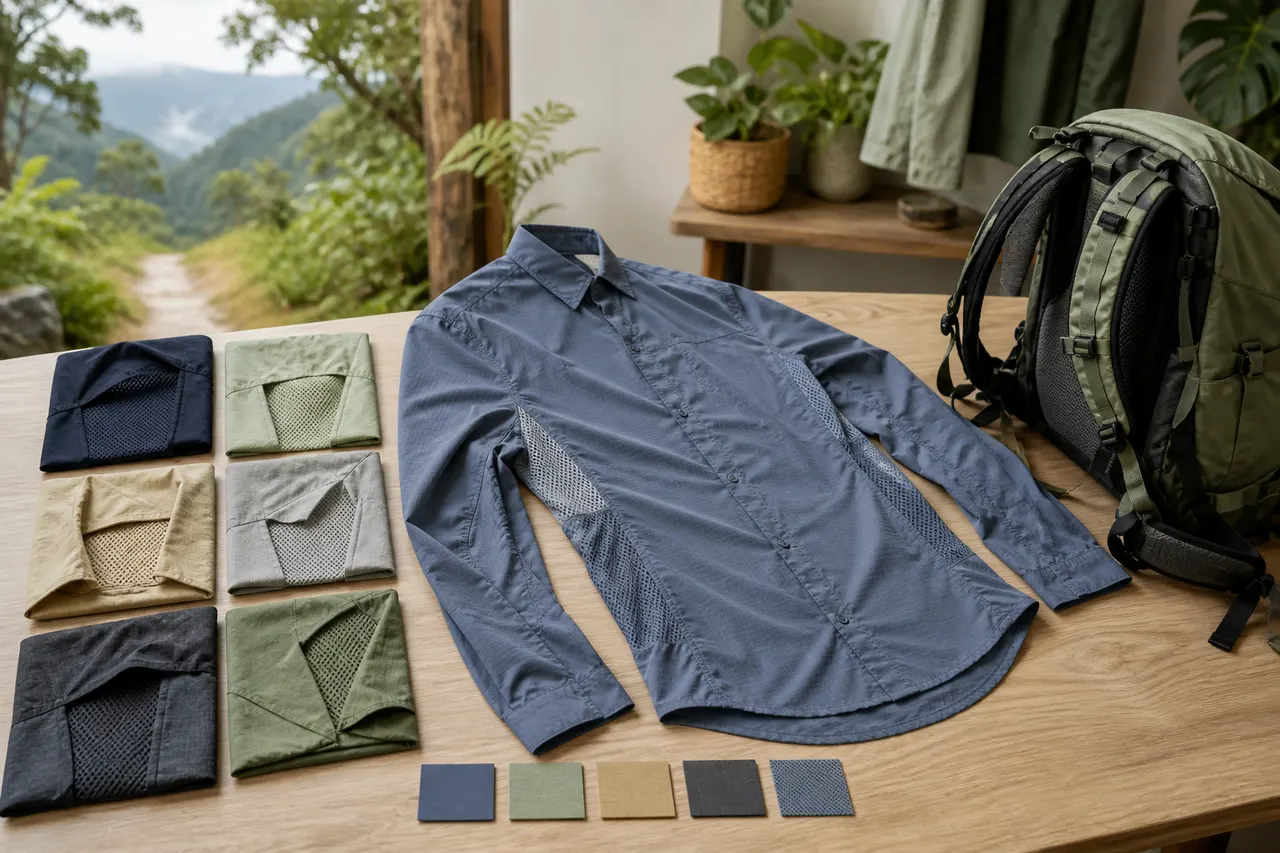
First Determine Hiking Climate, Trip Intensity, and Layering
Write down the usage conditions before opening the spreadsheet. Otherwise, the more candidates there are, the more likely you'll be distracted by photos and names.
Suggested information to record:
Climate: hot and humid, dry and hot, mild and windy, or with significant day-night temperature differences
Trip intensity: easy trail, continuous climbing, or multi-day with heavy load
Estimated backpack weight and daily carrying time
Layering: worn alone, over a base layer, or under a wind/rain shell
Whether you need roll-up sleeve tabs, chest pockets, hood compatibility, or a longer back hem
Acceptable looseness and range of motion
In hot and humid environments, pay more attention to ventilation structure, skin contact area, and comfort after sweating; for multi-day heavy loads, prioritize checking whether shoulder, underarm, and back seams might be in high-friction areas with the backpack. "Lightweight" doesn't mean suitable for all environments: overly thin fabric may be more prone to see-through, clinging, or snagging by branches.
What Screening Clues the Chinabuy Spreadsheet Can Provide
The spreadsheet's role is to build a candidate list, not to replace product page verification. The table may contain product names, images, prices, specs, seller info, or source links, but these fields can be outdated, missing, or inconsistently entered.
You can first use descriptions like "hiking shirt," "quick dry shirt," "vented shirt," "long sleeve outdoor shirt" to locate candidates, then check whether the images and spec fields match a hiking shirt. Don't make a purchase decision based solely on words like "quick-dry," "ice feel," "sun protection," or "professional outdoor" in the title. 🔎
During initial screening, keep entries that meet the following conditions:
The source link opens normally, not redirecting to the homepage, tag page, or blank page
The product page has a clear name, selectable specs, and images sufficient to identify the structure
Sleeve type, pockets, collar, and back structure can be identified
Size information includes at least chest, shoulder width, or length data for comparison
Key function claims have material descriptions, structural images, or other verifiable evidence
Price, inventory, discounts, specs, and link status are highly volatile information. This article does not record fixed prices or inventory conclusions; the person ordering should re-check on the day of submitting the order. The methods and risk descriptions in this article are verified as of September 3, 2026, and specific product status should be based on the page visible at that time.
Build a Candidate List by Fabric Label, Fit, and Ventilation Structure
First limit the candidates to three to five items, then do a detailed check. If the table only says "quick-dry fabric," mark it as to be confirmed, not infer fiber composition, weight, or drying speed on your own.
Fabric information can be graded by evidence strength:
Strong evidence: product page clearly lists fiber composition, ratio, and care label photos.
Reference evidence: product page has composition text, but no label photos or test data.
Weak evidence: only marketing words like "quick-dry," "breathable," "cooling."
Unconfirmable: different images, specs, or language versions contradict each other.
Fit should be judged in combination with layering. If worn alone, the chest still needs room for arm raising and reaching forward; if worn over a base layer, add the thickness of the inner layer. Excessive looseness increases fabric bunching and friction folds under the backpack, while too tight may restrict shoulder and arm movement.
Ventilation structure can include back panels, underarm mesh, localized perforations, or adjustable cuffs. Seeing these structures does not mean the entire garment has passed breathability performance tests; it only indicates potential air channels. 🌬️ If the page doesn't clearly show the openings, mesh area, or inner-outer layer relationship, mark "ventilation" as unconfirmed.
Use a Comparison Table to Check Sleeve Type, Pockets, and Backpack Contact Areas
The following table is used to turn visible structure into actual selection criteria. Don't fill in unclear parts as "yes" or "no"; uniformly write "pending QC confirmation."
Check Location | Applicable Scenario | Evidence to Verify | Common Risks |
|---|---|---|---|
Long sleeves and roll-up tabs | Sun exposure, lots of brush, or temperature changes | Sleeve tabs, button positions, and how they secure when rolled | Tabs too short, buttons loose, or rolled sleeves pressing on forearm |
Cuffs | Need to adjust ventilation or wear gloves | Cuff width, button positions, and stitching | Opening too narrow, or hardware rubbing wrist during activity |
Chest pocket | Need to temporarily hold small light items | Pocket opening direction, closure method, and size reference | Overlapping with sternum strap, forming pressure point when loaded |
Shoulders and upper back | Long backpacking trips | Shoulder seam direction, panel placement, and surface thickness | Seam exactly under shoulder strap, continuous friction |
Back ventilation zone | Hot and humid or high-intensity climbing | Panel openings, mesh area, and inner layer connection | Images only show decorative stitching, no actual channel |
If carrying a heavy backpack, prioritize candidates where shoulder seams avoid the main pressure areas of the straps, the back has fewer decorations, and there are no obvious hard protrusions. More pockets aren't always better; zipper pulls, buttons, or overlapping layers within the chest strap and hip belt coverage can create local pressure points. 🎒
Judge Size Based on Shoulder Width, Chest, and Range of Motion
Size judgment should use centimeter data, not just labels like S, M, L. Letter sizes have no uniform correspondence across different products, and you can't just choose based on a model's similar height.
First measure an existing shirt that is comfortable for arm raising and backpack activity:
Shoulder width: straight-line distance between the two shoulder seams
Chest width: flat horizontal measurement under the armpits; to get garment chest circumference, convert according to measurement method
Length: from a designated neck point to the hem
Sleeve length: confirm whether the product page measures from shoulder point or center back
Hem width: especially important if it needs to cover hips or for layering
Compare your existing garment data item by item with the product size chart, and confirm whether the product page states flat measurements, body measurements, or recommended body size range. If the measurement method is unclear, ask first or wait for warehouse measurement; do not mix the three types of data.
Range of motion allowance has no fixed value for everyone. Put on the planned inner layer, simulate arm extension, overhead reach, and hugging backpack straps, then use that garment's actual dimensions as reference. If the candidate only has chest circumference and lacks shoulder width, dropped shoulder or raglan designs still need to be judged through clear images and QC measurements.
Check Seams, Buttons, and Mesh Areas in QC Photos
QC photos are meant to confirm the specific item received by the warehouse, not to prove wearing experience. When checking, distinguish "visible facts in the image" from "performance that cannot be judged by image alone." 🧵
Suggested sequence:
Front and back match the ordered specs, color, and sleeve type
Shoulder seams, underarms, side seams, and back panels have no obvious skipped stitches, open seams, or severe asymmetry
Button count, positions, and spare buttons match the product display
Zipper pulls, snaps, and hook-and-loop are not in positions where backpack straps or sternum straps might press
Mesh areas truly exist and edges are intact
Sleeve tabs are present on both sides and closure positions are not significantly offset
Size tag, composition tag, and care tag are clearly photographed
Measuring tape is straight, starting point correct, garment naturally flat
Color difference, softness, skin feel, actual drying speed, and friction after long-term backpacking usually cannot be reliably confirmed through ordinary QC photos. If seams or mesh areas are folded or obscured, request additional photos of those specific spots instead of treating missing images as passing evidence.
Verify Links, Specs, and Unconfirmable Function Claims
Return to the corresponding candidate record on china-buy.org and the current product page, and check one by one whether the link still points to the same item. If the page redirects, specs disappear, images change, or the title changes significantly, pause ordering and re-confirm the source product.
Keep evidence boundaries for the following claims:
"Quick-dry" requires clear test methods and conditions to compare drying speed
"Sun protection" without verifiable test standards, ratings, and applicable conditions should not be considered proven protection
"Waterproof" and "water-repellent" are not the same concept, and cannot replace a raincoat
"Antibacterial" and "odor-resistant" need corresponding material or test evidence
"Abrasion-resistant" cannot be judged just because the fabric looks thick
If the product page lacks evidence, keep the candidate but mark the function as "unconfirmable." For needs directly affecting safety or health, such as protection in strong UV environments, do not rely on unproven marketing descriptions. ⚠️
Complete Size, Usage, and Evidence Checks Before Ordering
Before submitting the order, complete a final cross-check:
Target climate, trip intensity, and layering are written down
Product color, size, and sleeve type match the candidate record
Size chart measurement method is clear, and compared with existing well-fitting garments
Shoulder, chest, and arm-raising space meet activity needs
Backpack strap and sternum strap contact areas have no obvious hardware or thick overlapping layers
Ventilation structure has clear image support, and unconfirmed parts are marked
Source link is currently accessible, specs and inventory re-checked on the order day
Positions needing additional photos and measurements at QC stage are listed in advance
Sun protection, quick-dry, waterproof, or antibacterial claims are not treated as unconditional facts
Return/exchange, warehouse handling, shipping restrictions, shipping fees, and destination country taxes are confirmed separately according to rules visible at the time of ordering
The value of this screening method is not to guarantee buying the "best" shirt, but to reduce the probability of selecting the wrong structure, size, or purpose. It may save costs of exchanges and repurchases due to size mismatch, backpack friction points, or incorrect functional expectations, but cannot eliminate uncertainties in color difference, feel, durability, and actual wearing performance.
The method is most suitable for hikers willing to measure existing garments, compare product evidence, and carefully check QC photos. It is not recommended for scenarios that must rely on certified sun protection, rain protection, or professional protective performance; when key test data, size data, or structural images are missing, giving up that candidate is usually safer than betting on marketing words.
Editorial note: This article was generated by an automated content process of the Panda-Buy Editorial Desk and automatically checked for task suitability, factual boundaries, original expression, and risk warnings. No claim is made of actual purchase, wear, or field testing by a person.
Agent Platform Shopping FAQ
1. What's the best way to locate a product I want on china-buy.org?
You can enter a single keyword to search, or browse the category page where items are sorted by brand as well. Using more specific search terms usually gives fewer but more accurate results than shorter ones. For instance, you could search for "Air Force 1 White," "sneakers," or just "Air Force 1."
2. Why should I use a spreadsheet when shopping on china-buy.org?
Since agent platforms like china-buy.org usually don't show products directly, you need a spreadsheet to look up items you like and get their purchase links. You could also ask on Reddit or Discord for help—those communities often suggest great products, but the process can be slow. Spreadsheets are usually built over a long time by compiling information from these sources.
3. Why isn't Google Sheets recommended for china-buy.org product lists?
Google Sheets works only for small product lists. With more items, it becomes very slow and laggy, especially on mobile devices where the interface is poor and searching is hard. For the same products, the spreadsheet on china-buy.org loads faster and looks much better.
4. Which platforms offer the best coupons for china-buy.org users?
I suggest Kakobuy because it currently provides a $15 discount code with no minimum spend. That's a great option for small orders. Use the promo code kakobuy888.
Browse our latest products and find your next favorite item.