chinabuy High-Instep Shoe Fit Guide
chinabuy High-Instep Shoe Fit Guide
chinabuy High-Instep Shoe Fit Guide
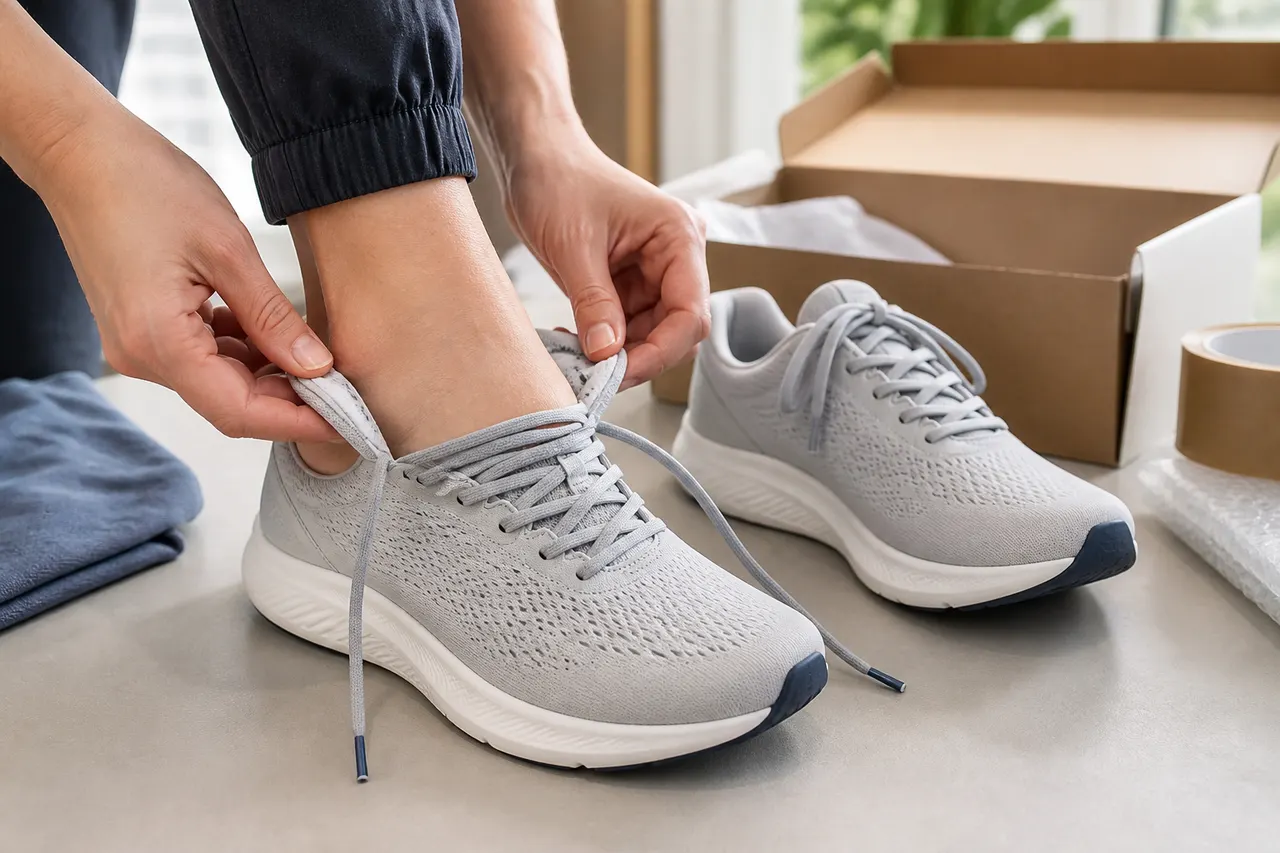
When buying athletic shoes for high insteps, the most common mistake is simply going up a size. Increased shoe length does not mean increased upper volume; instead, it may cause heel slippage and excess room in the toe box, while the instep remains compressed by the tongue or laces.
This guide is intended to help users who are planning to find and order athletic shoes through chinabuy to assess the risk of instep pressure before payment, based on product information, seller details, and warehouse QC photos. After reading, you should be able to rule out candidate shoes with overly narrow tongue openings, insufficient lace adjustment range, or incomplete sizing evidence.
This article is not suitable for determining professional orthopedic needs, nor can it replace trying on shoes. Instep pain, numbness, persistent swelling, or significant differences between the left and right feet should be evaluated by a podiatrist or medical professional first.
Data verification date: August 29, 2026. This article does not use unverified real-time prices, inventory, shipping costs, or return policies; these highly variable details should be reconfirmed on the actual order page.
First, identify the specific fit issues caused by a high instep
A high instep typically affects the vertical space inside the shoe, not necessarily meaning the foot is longer or the forefoot is wider. First distinguish where the pressure occurs to decide whether to check the last, tongue, or lacing structure.
Common symptoms include:
The shoe length is appropriate, but the top two or three lace holes are spread wide apart.
The center of the tongue or the lace crossover presses on the instep, leaving noticeable marks after wearing.
Loosening the laces relieves pressure, but the heel becomes loose.
There is already enough room in the toe box, but increasing size still does not solve instep compression.
The instep heights of the left and right feet differ, making it impossible for the same lacing method to be comfortable for both.
Measure when your feet are in a stable state during the day, and wear the socks you plan to pair with the shoes. Record the foot length, forefoot circumference, and instep circumference for both feet; if the measurements differ, use the side that needs more space as the screening baseline.📏
Do not order based solely on "I usually wear size 42." Different shoe models may have different marked sizes, insole lengths, lasts, and upper structures. Your usual size can only serve as a starting point, not as proof of fit.
Evidence available for judging upper volume and its boundaries
On the specific product page on chinabuy, prioritize checking the currently visible size chart, actual photos, material descriptions, seller notes, and available warehouse QC photos. Only content actually displayed on the page can serve as evidence for that product; the product title or search tags alone do not prove the last is suitable for a high instep.
Evidence | What it can determine | What it cannot determine |
|---|---|---|
Insole or inner length measurement photo | Whether the shoe's inner length is close to your needs | Vertical upper space and actual pressure sensation |
Top-down actual photo | Tongue opening, lace hole spacing, and left-right symmetry | Softness/firmness and long-term comfort when worn |
Side profile photo | Upper contour, number of overlays, and midfoot structure | Precise instep circumference capacity |
Material description | Potential stretch conditions of the upper | Whether the material is necessarily soft or will naturally stretch out |
Buyer or seller sizing advice | Provides initial reference direction | Individual guarantee for your foot shape |
If the product page lacks a clear name, sizing information, or identifiable actual photos, do not infer based solely on similar images. Different batches, colors, and sizes may have structural differences; relevant information should correspond to the specific option you intend to purchase.
Initial screening of candidate shoes based on tongue structure and opening width
First, check whether the tongue allows the opening to be sufficiently wide. An independent tongue is usually easier to adjust than a structure largely stitched to the upper, but still needs to be judged in combination with lace hole positions. Sock-like collars, inner bootie constructions, or tongues with large fixed areas on both sides may restrict both entry and instep volume.
When viewing top-down photos, focus on:
Whether the tongue can be pulled forward, rather than being tightly restricted by fabric on both sides.
Whether the shoe opening forms a sufficiently wide entry channel after the laces are fully loosened.
Whether the midfoot area has thick overlays, rigid support pieces, or decorative straps.
Whether the top lace holes are too close to the ankle, leaving an excessively short adjustment zone.
Whether the tongue is too thin, potentially concentrating lace pressure on a small area.
A mesh appearance does not mean high-instep friendly. Breathable holes only indicate surface texture; they do not prove the upper has sufficient stretch. Multiple layers of bonding, internal lining fabric, and structural adhesives can all limit actual space.
If photos only show the side or are heavily edited, making the tongue opening unclear, list the shoe as a candidate needing additional evidence rather than assuming it is suitable.🔍
Check lace length, lace hole layout, and adjustable margin
A high instep requires not only longer laces but also a reasonable hole distribution. After loosening the laces, the two sides of the lace holes should still have room to expand outward; if the sides of the upper are already near their limit, switching to longer laces only helps with tying, not increasing the structural volume inside the shoe.
Before ordering, check in the following order:
Count the effective lace holes or lace loops, and confirm whether the midfoot area can be adjusted in segments.
Check whether the laces in the product photo are already near maximum looseness.
Observe whether there is enough length left after the top lacing for a secure knot.
Check for fixed straps, zippers, or non-adjustable decorations between lace holes.
Determine whether the ankle area can still be tightened independently after loosening the midfoot to control heel fit.
Parallel lacing, skipping holes, or loosening the instep area can sometimes reduce localized pressure, but they only redistribute lace tension. If the upper itself is too low, the inner bootie is too tight, or a rigid overlay crosses the instep, changing the lacing method usually cannot completely solve the problem.
Cross-check size with foot length, foot circumference, and typical sock thickness
Size verification should start with actual measurements, not mechanical conversion between country sizes. Compare both feet's data, typical sock thickness, and the product size chart together, and confirm whether the size chart provides recommended foot length, insole length, or inner shoe length. These three concepts cannot be used interchangeably.
Recommended recordings:
Foot length of left and right feet.
Circumference at the widest part of the forefoot.
Circumference at the highest point of the instep, keeping a photo of the measurement location for your own rechecking.
Type and thickness of socks you usually wear.
Insole length, tongue structure, and marked size of a known well-fitting athletic shoe.
If the page only provides insole length without instep circumference or inner shoe height, limit your conclusion to "length may be suitable." Do not blindly increase multiple sizes to gain instep space. Going up in size may lead to misaligned forefoot flex point, heel slippage, and gait instability.
When you need to ask the seller or purchasing agent for additional information, be specific. For example, request confirmation of the removable insole length for a specific size, the maximum tongue opening state, or a top-down photo of the upper in its natural resting position. Do not just ask "Can someone with a high instep wear these?" because such an answer lacks verifiable standards.
Identify upper tightness and left-right differences from QC photos
If the order reaches warehouse inspection and QC photos are available, request or select angles that show the upper structure clearly. Top-down photos, photos with the tongue pulled open, and side-by-side photos of both shoes are more valuable than images showing only the box or outer side.📷
When inspecting, pay attention to:
Whether the lace hole spacing differs significantly between the left and right shoes.
Whether the tongue is centered, and whether its edges are abnormally pulled by stitching or lining.
Whether the upper already shows obvious creases, indentations, or height differences between left and right in an unworn state.
Whether the laces, tongue loops, and lace holes are intact.
Whether the received size, color, and style match the order options.
Whether the size label and measurement photo belong to the same pair of shoes.
QC photos of unworn shoes cannot directly show "instep tightness" because there is no real foot shape applying pressure inside. They can help identify structural limitations, assembly differences, and information inconsistencies. Do not treat the natural lace hole spacing as an accurate instep capacity, nor judge the upper as definitely roomy based on a single angle.
When noticing left-right differences, first rule out visual deviations caused by lace tightness and placement angles, then request additional photos. Whether returns, exchanges, re-photography, or re-inspection are possible depends on the service conditions and processing deadlines displayed on the order at the time.
Pressure sensation and return/exchange risks that cannot be confirmed before arrival
Even if length, photos, and lacing structure pass inspection, it is still impossible to reliably confirm tongue softness, lining friction, flex point during walking, and localized pressure after wearing for a period before the shoes arrive. These experiences cannot be replaced by images, nor can comfort be claimed based on appearance.
Cross-border orders may also involve return/exchange deadlines, warehouse handling fees, domestic return shipping costs, international shipping fees, and item condition requirements. Policies and amounts change, so check the current page separately before payment, warehouse processing, and international shipping. Do not cut tags, wear outdoors, or discard packaging before confirming fit.
After arrival, conduct a short indoor try-on:
Wear the same type of socks used for measurement when ordering.
Fully loosen the laces before putting on, then adjust segment by segment from front to back.
Stand and walk lightly, checking the center of the instep, tongue edges, and top holes separately.
Compare left and right feet for numbness, tingling, obvious marks, or heel slippage.
If persistent pain or numbness occurs, stop trying on immediately, and do not rely on the assumption that "it will stretch out with wear."
Materials may change with use, but the degree of change cannot be guaranteed in advance. Treating a noticeably tight shoe as something to break in increases the risk of losing return/exchange eligibility.
Complete the high-instep fit checklist before ordering
Before payment, do a final check with the checklist below: ✅
Measured both feet's foot length, forefoot circumference, and instep circumference, and recorded the larger side.
Included typical sock thickness in measurement conditions.
Distinguished foot length, insole length, and inner shoe length in the size chart.
Product information clearly shows tongue, opening, and midfoot overlay structure.
Tongue can be opened reasonably, and there is no significant non-adjustable transverse restriction at the midfoot.
Lace hole layout allows loosening the instep area while retaining ankle lockdown ability.
Did not treat mesh appearance, a seller's one-line advice, or ordinary size labels as a fit guarantee.
Planned to check size label, top-down structure, and left-right differences during QC stage.
Reviewed return/exchange conditions, processing deadlines, and potential fees applicable to the current order.
Kept expectations for unverifiable wearing sensations, and did not write image judgments as try-on conclusions.
The value of this method is mainly to reduce the probability of choosing the wrong structure and increasing size without basis, not to promise that a particular shoe will fit. It may save costs related to product handling and cross-border shipping from a wrong order, but the specific amount depends on the order, route, and after-sales conditions at the time and cannot be estimated without real-time data.
The increased risk is: choosing an oversized size to gain more instep space may result in heel instability; waiting to consolidate more items for shipping to reduce parcel count may also miss the processing window for shoe orders. This checklist method is most suitable for users with normal foot length but frequent compression from the tongue or laces, and who are willing to supplement evidence during ordering and QC stages.
If the product lacks basic sizing information, the tongue structure cannot be seen clearly, return/exchange conditions are unacceptable, or you have foot issues requiring professional care, it is not recommended to continue purchasing based solely on online images. In such cases, giving up on a candidate shoe with insufficient evidence is usually safer than gambling on a larger size.
This article is organized from an editorial perspective by the Panda-Buy Editorial Desk, and the content does not represent real consumer experiences. The article is generated based on verifiable measurement methods and evidence boundaries, and does not claim real person purchases, try-ons, or reviews; specific product facts and order conditions still need to be verified at the time of publication and ordering.
Agent platform shopping FAQ
1. How can I tell if a product on china-buy.org is made well?
Check the QC photos instead of relying on factory images, as those are often edited. The QC photos let you verify that the item's details match your requirements before you decide to buy. Also, be cautious with extremely cheap products, since they tend to have poor quality.
2. What should new users of china-buy.org keep in mind when they first start?
First-time users on china-buy.org who access the service through a spreadsheet usually get a welcome shipping discount package. Additionally, you should follow the step-by-step beginner's shopping guide.
3. What kinds of items does china-buy.org carry?
china-buy.org lists a wide variety of categories, such as shoes, T-shirts, sweaters, hoodies, jeans, sweatpants, shorts, beach shorts, factory clearance goods, down jackets, baseball jerseys, shirts, hats, jewelry, bags, electronics, sunglasses, socks, underwear, and trendy collectibles.
4. What can I do on china-buy.org if I'm not happy with an item I received?
Reach out to china-buy.org's customer service team right away. Many non-specialty items from Chinese sellers have a 5-day unconditional return and exchange window. If you want to send it back, you can request a return. If the package has already been shipped and delivered to you and there is a quality problem, contact china-buy.org's customer service so they can help you discuss a compensation plan with the seller.
Customer service email addresses for other platforms are listed below:
kakobuy: [email protected]
oopbuy: [email protected]
usfans: [email protected]
hipobuy: [email protected]
superbuy: [email protected]
Browse our latest products and find your next favorite item.